TOP OUTLET TANKS
Traditionally, heating oil tanks in Great Britain and Ireland have incorporated an outlet connection, positioned near the base of the tank. However, with the advent of modern, pressure jet burners, top outlet tanks are becoming increasingly more prevalent. Today, a top outlet system is offered as an option by most storage tank manufacturers, on most models.
Estimated Reading Time: 4 minutes
Top Outlet Tanks
For decades, top outlet connections have been the norm across many European countries and North America. In the UK and Republic of Ireland, however, bottom outlet tanks have historically been fitted at the overwhelming majority of installations. But that’s beginning to change. In recent years, demand for top outlet tanks has grown significantly.
One of the biggest drivers in demand, has been a recognition of the role top outlet tanks can play, in reducing the risk of an accidental oil spill. The difference is simple:
- Disconnect or damage the fuel supply line from a bottom outlet tank, and gravity will allow the contents of the tank to escape, potentially resulting in a serious pollution incident;
- Disconnect the fuel supply line from a top outlet tank fitted with an anti-siphon valve, and the oil stays where it belongs — safely inside the tank.
It’s a relatively simple difference in design. But it's a difference that provides a valuable additional layer of protection, against accidental fuel loss and environmental pollution.
Integrated Top Outlet Systems
Many top outlet tanks incorporate an integrated outlet system, such as Atkinson Equipment's industry-standard TankTop. Such systems cleverly contain everything required for a standard domestic heating oil installation, pre-fitted to the tank. To complete the install, just connect the oil supply line.
This approach helps reduce installation time and cost, without compromising environmental protection and performance. Dependent upon model and manufacturer, these extra features may include:
- An isolation valve which allows the supply of oil from the tank to be discontinued by pressing a button or pulling a lever;
- An anti-siphon valve to ensure that if the oil supply line become disconnected or damaged, stored fuel does not drain from the tank;
- A filter to remove residual particulates and contaminants, maintaining fuel quality, and reducing the risk of boiler breakdown;
- A floating suction line which draws oil from just below the surface, to reduce the risk of water contamination;
- A push-fit oil line connection point to permit the oil supply line to be easily connected.
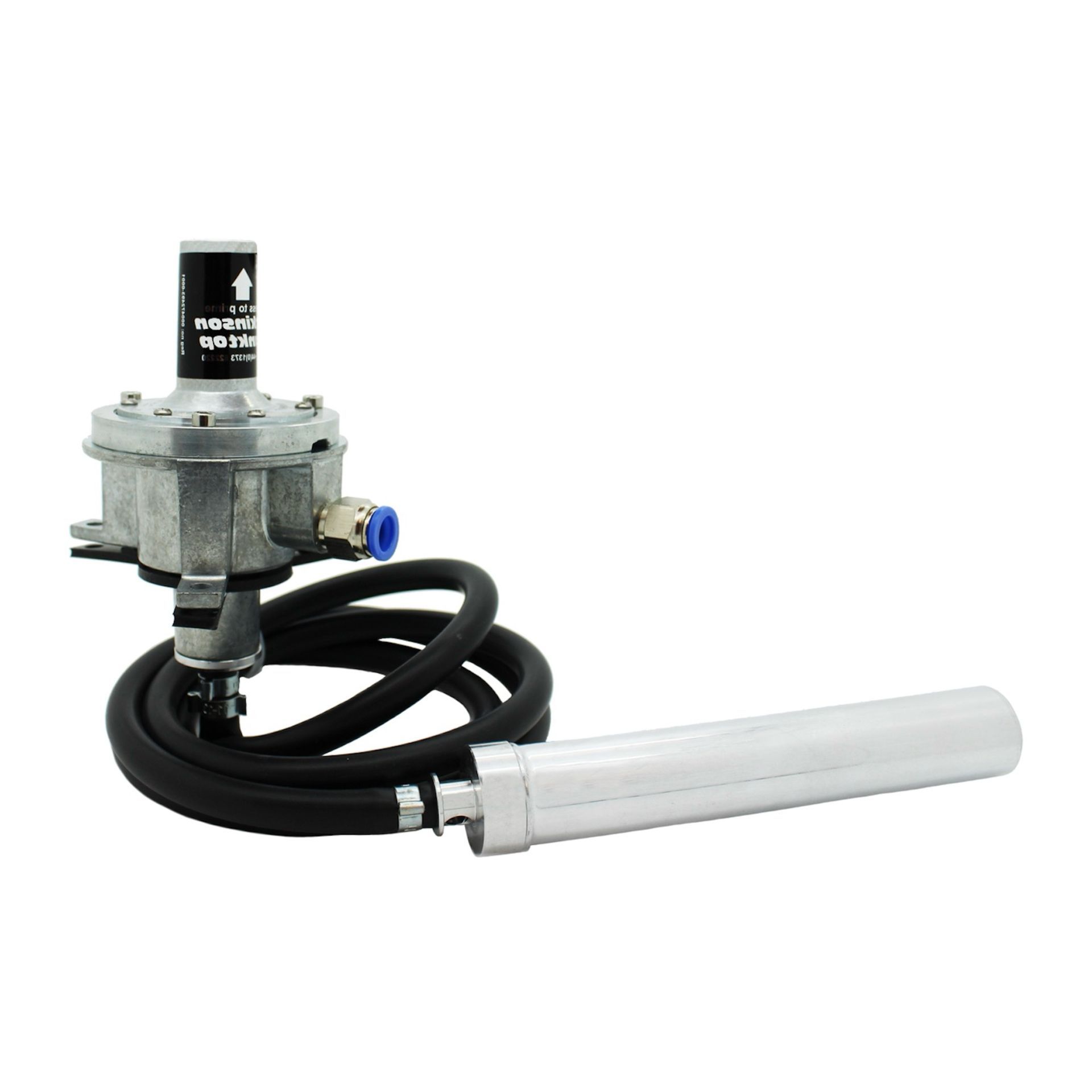
Atkinson Equipment's TankTop top outlet system, is fitted to many top outlet tanks supplied in Great Britain and Ireland. Photo Credit: Atkinson Equipment Limited

At installations incorporating an appliance with a pressure-jet burner, a de-aerator (such as this Tiger Loop device) should be fitted. Photo Credit: SPX Flow / Tigerholm
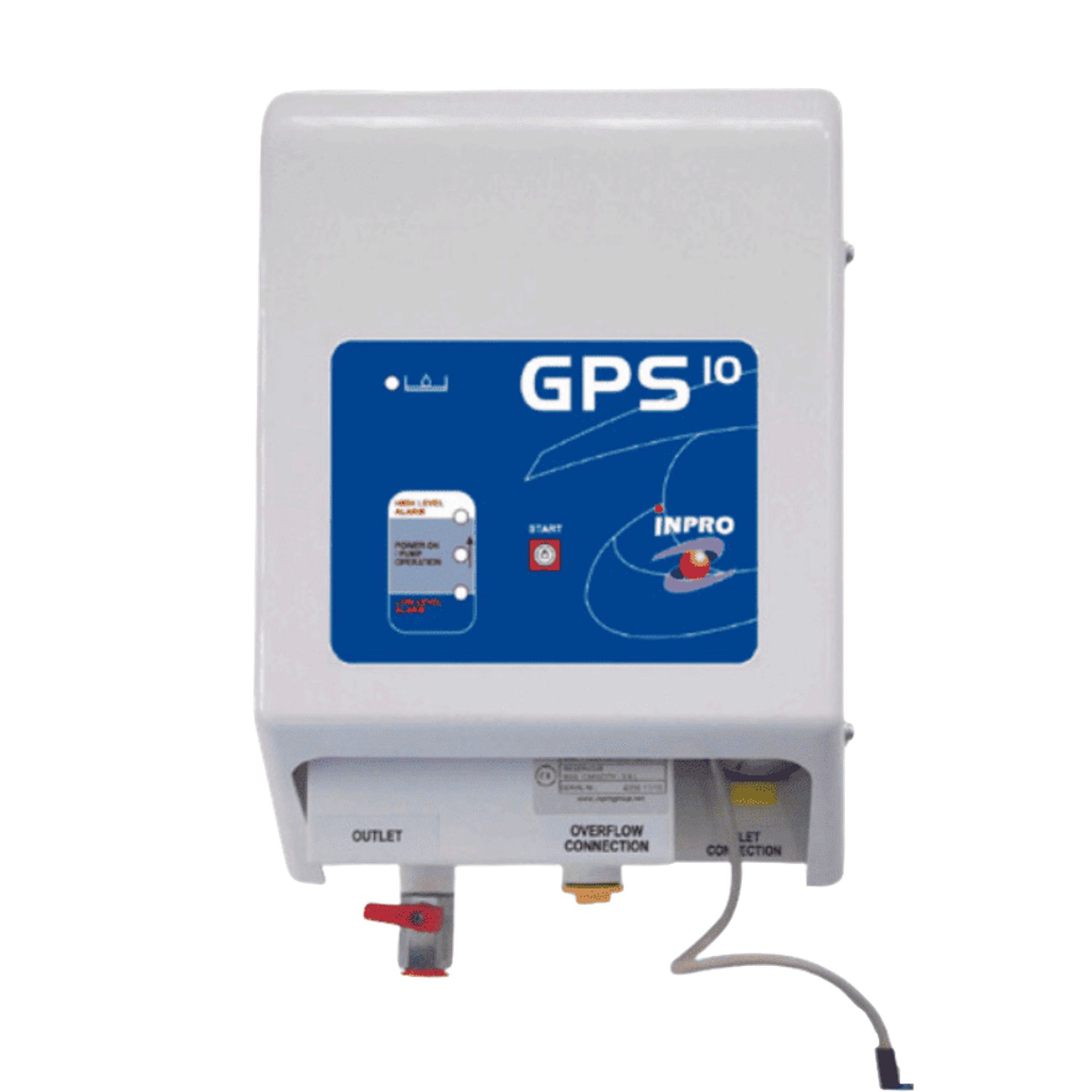
At installations with older appliances utilising a vaporising burner, an oil-lifter must usually be fitted, when installing a top outlet tank. Photo Credit: Inpro Group
Top Outlet Oil Tank Suitability
Subject to the installation of a suitable de-aerator (e.g. Tiger Loop), top outlet tanks are compatible with most oil-fired appliances incorporating a pressure jet burner – that’s pretty much every boiler on sale in the UK and Republic of Ireland today – and many, but not all, oil-fired range cookers too. De-aerators such as a Tiger Loop, automatically remove air and gas from the oil supply, providing the burner with a consistent supply of de-aerated fuel. This can improve reliability, reduce burner lockouts, enhance efficiency, and promote a cleaner burn.
There are, however, some installations which are less well suited to top outlet tanks. Some older oil-fired appliances — particularly range cookers fitted with vapourising burners — may require an oil lifter when connected to a top outlet tank. However, appliances of this type are increasingly unusual.
Pipework is another important consideration. With a conventional bottom outlet tank, the appliance will almost always be supplied through a 10mm diameter oil line. With a top outlet tank, however, optimum internal pipe diameter can and will vary depending upon factors such as the appliance, burner, pipe run and installation configuration. This doesn’t make top outlet tanks difficult to install — it simply requires a little expert knowledge, to ensure the oil supply line is correctly sized for the application.
Your storage tank technician can confirm whether a top outlet tank is suitable for your particular boiler, cooker or heater, and will ensure that the oil supply line is correctly sized and configured.

This Carbery 1000SB Superslim Bunded Heating Oil Tank incorporates a bottom outlet, in a fixed position, towards the base of the tank. Image Credit: Author

This Carbery 1000SB Superslim Bunded Heating Oil Tank features a top outlet, which allows the installer to determine the oil supply line exit point from the tank, at any point above the bund part line. Image Credit: Author
Header Photo Credit: Author
Our Take...
At most new and replacement oil tank installations, a top outlet tank would be our default choice. They’re often quicker and simpler to install than a traditional, bottom outlet tank. And since the outlet is positioned above the maximum level of oil inside the tank, when equipped with an anti-siphon valve, they all but eliminate the risk of a spill, should the oil line ever become damaged or detached.
The only exception is perhaps when choosing a tank to supply a vapourising appliance. Here, we’d give serious consideration to simply fitting a bottom outlet tank instead. Sure, the installation of an oil-lifter would permit the use of a top outlet tank. But this will require the installation of an electrical supply. For some, and perhaps many homeowners, this defeats the point of choosing a vapourising appliance in the first instance.
Finally, if choosing a bottom outlet tank, it always makes sense to ensure an isolation valve is fitted
before, and
separately from, the filter. This arrangement ensures that if an issue arises with the filter, the supply of fuel from the tank can be isolated, and the issue remedied, without having to first drain the tank.