MONITORING
There’s nothing worse than running out of heating oil. But the good news is that today, you don’t have to.
In response to consumer demand, wireless monitoring systems have been developed. These allow you to monitor the level of fuel in your tank outside, from the warmth, comfort and convenience of being inside. A growing number of systems additionally allow you to monitor your tank online too.
Estimated Reading Time: 6 minutes
Wireless Oil Tank Monitoring Systems
The first commercially available, domestic wireless monitoring systems, were pioneered by Co. Armagh based Sensor Systems Limited in the 1990s, under the Oil Watchman brand. Today, local and remote monitoring systems are available, together with wireless heating oil energy monitors, and web-based monitoring systems, from a choice of manufacturers.
Compared with old-fashioned sight gauges, wireless tank monitoring offers an important safety advantage — it can help reduce the risk of an accidental oil spill. A conventional sight gauge is typically connected to the tank outlet, at or below the level of fuel stored inside the tank. So, if the gauge, tube or connection is damaged, oil may be able to escape — potentially resulting in a costly and environmentally damaging pollution incident.
Wireless monitoring works differently. Because the monitoring device is fitted above the maximum fuel level, there’s no direct connection to the tank outlet. So, if the gauge is accidentally damaged, knocked or even completely detached, the contents of the tank remain firmly and safely inside.
Going wireless doesn’t have to mean making things complicated. Today, there’s a wide choice of wireless tank monitoring systems available. While designs and features vary between manufacturers, most are quick and straightforward to install, often taking just a few minutes and requiring no specialist tools or technical skills.
Simple to fit. Easy to use. And one less potential route for oil to escape.
Local Monitoring Systems
Local monitoring systems, such as the ever-popular Apollo Ultrasonic and Watchman Sonic product ranges, allow you to check the level of oil in your tank without having to venture outside — bringing greater convenience and peace of mind to your home or office.
So, how do they work?
An ultrasonic sensor fitted to the tank measures the level of fuel inside and wirelessly transmits this information to a receiver, which simply plugs into a standard 3-pin electrical socket. The receiver’s LCD display then shows you how much oil remains in your tank, allowing you to keep an eye on your fuel level, from the warmth and comfort of your home.
And for even greater peace of mind, some local monitoring systems can also be combined with remote monitoring. This allows you to check your oil level at home, while your fuel distributor monitors it remotely too.

Local monitoring systems, typically use ultrasound to determine the level of fuel remaining inside the tank. Liquid level data is then relayed wirelessly to a remote receiver unit, where it is displayed on an LCD screen. Image Credit: Author
Heating Oil Energy Monitors
Apollo Smart was the world's first heating oil energy monitor. It builds upon the feature set of local monitoring systems and adds extra benefits. As well as being able to view an approximation of the volume of fuel remaining in litres and as a percentage of total tank capacity, you can view and review a wide range of consumption and performance data too, including usefully, an estimate of days' supply remaining.
Remote Monitoring Systems
Instead of having to keep watch on your tank, a remote monitoring system, allows your fuel distributor to keep an eye on your tank remotely. This arrangement combines the assurance of supply, traditionally associated only with mains fuels (e.g. gas and electricity), with the freedom and flexibility of heating oil. For more information on remote monitoring systems, contact your fuel distributor... but beware any offers that combine remote tank monitoring, with an automatic fuel delivery service.
Web Monitoring Systems
Web Monitoring Systems, such as the Watchman Sonic Advanced with Sensit USB receiver, are a relatively recent addition to the market and allow you to monitor your tank from almost anywhere on earth, via an app on your smartphone or tablet. Usually, they will also alert you to any sudden drop in the level of fuel inside your tank, as well as estimating how many days' supply remains. Given that smartphones are central to how we live today, it makes sense to monitor your tank from your phone. Web monitoring systems are also a real boon for anyone tasked with monitoring an elderly relative's fuel supply, or for keeping an eye on a tank installed at a second home.
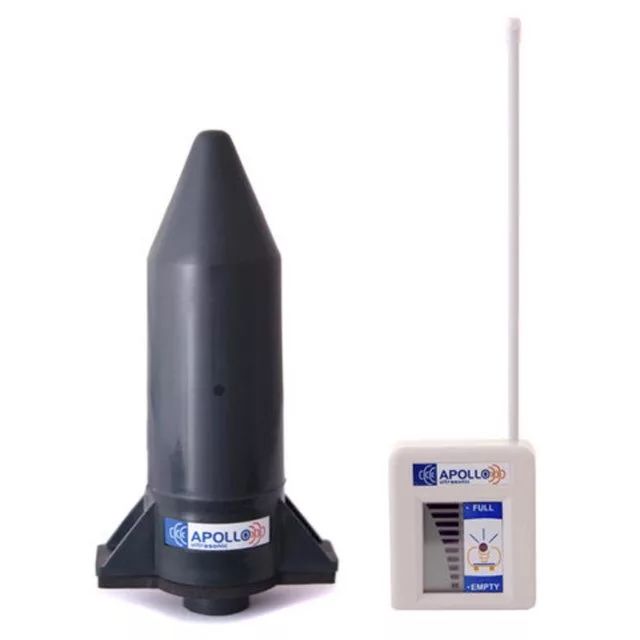
The Apollo Ultrasonic Heating Oil Tank Level Monitor is a popular local monitoring system. Photo Credit: Dunraven Systems Limited
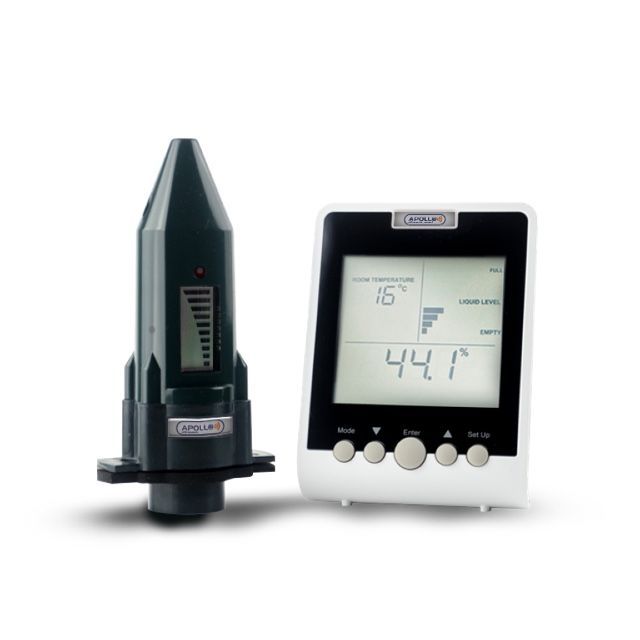
Developed by Dunraven Systems, Apollo Smart is the world's first heating oil energy monitor. Photo Credit: Dunraven Systems Limited
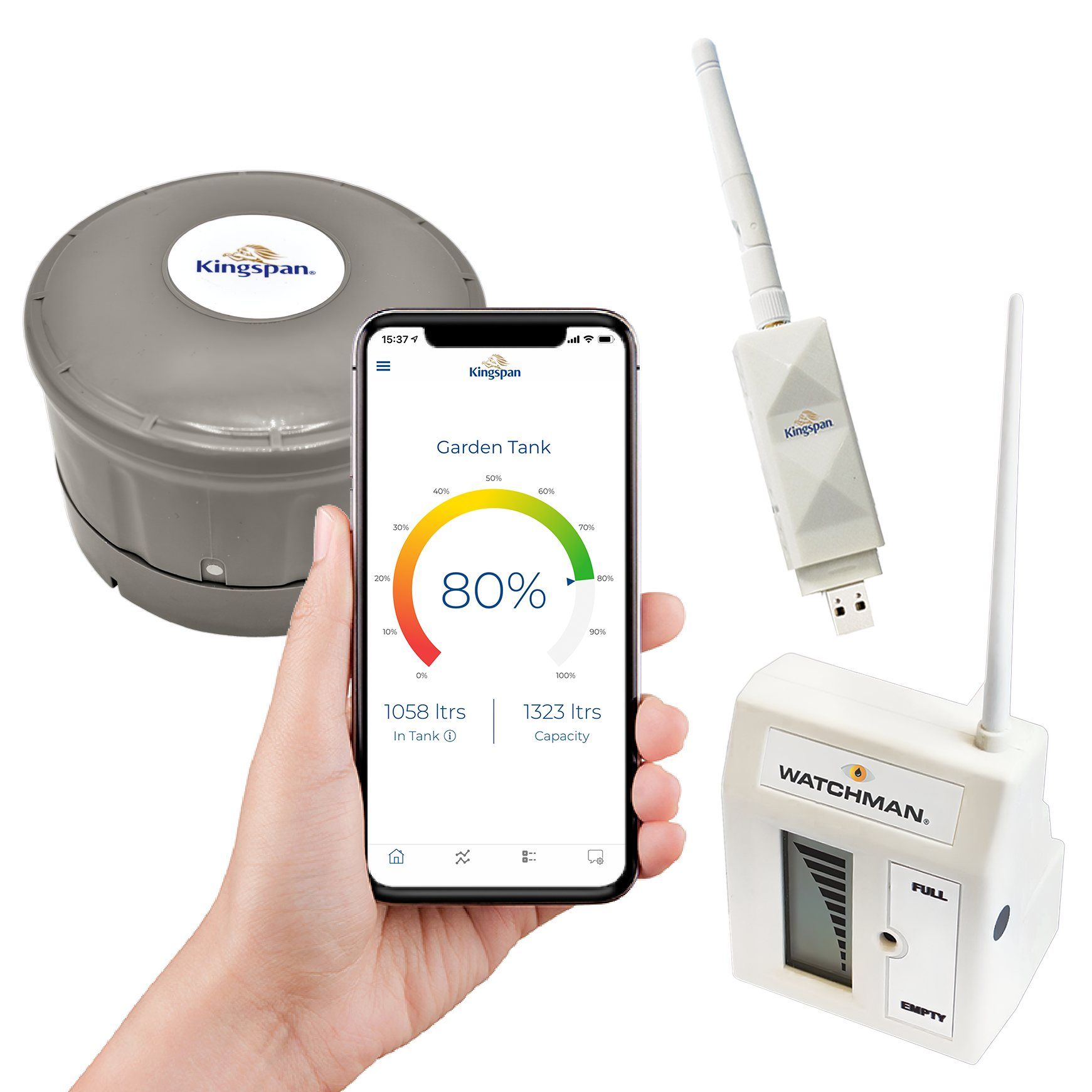
Watchman Sonic Advanced with Sensit USB functionality, allows you to monitor your tank from your phone. Photo Credit: Kingspan
Alternative Monitoring Technologies
Despite the widespread popularity of local and remote electronic oil monitors at modern heating oil installations, alternatives do exist:
Float Gauges
A float gauge consists of a float placed inside the tank, and connected to a dial at the top of the tank, by a cable. As the level of fuel increases and decreases, the value of the dial changes to reflect the volume of fuel remaining. Float gauges are a popular measurement system at larger, commercial installations alongside hydrostatic gauges. However, at many domestic heating oil storage installations today, they have largely been superseded by wireless monitoring systems.
Hydrostatic Gauges
A hydrostatic pressure gauge consists of a flexible ‘bulb’ placed inside the tank and connected to a dial or digital display on the outside. As the level of fuel inside the tank increases, the change in pressure is sensed by the bulb and communicated to the external display via a pressure tube. Whilst hydrostatic gauges are again a popular choice at commercial, industrial and institutional premises, they are rarely found today at domestic installations.
Sight Gauges
Sometimes also called sight glasses or sight tubes - sight gauges comprise a tube and valve, connected to the outlet of your tank. By pressing a button at the base of the gauge, the level of oil inside the tube rises or falls, allowing you to view the level of fuel inside. For decades, sight gauges were the most popular tank measurement system in Great Britain and Ireland.
Because they’re connected to the base of the tank, there is unfortunately an ever-present risk of pollution should the gauge become damaged or detached. The tube will also have to be replaced periodically – typically every 5 to 10 years and should be inspected at least annually. It’s also important to note that sight gauges are only suitable for use with single skin tanks. They should not be fitted at oil storage installations which incorporate an integrally bunded tank.
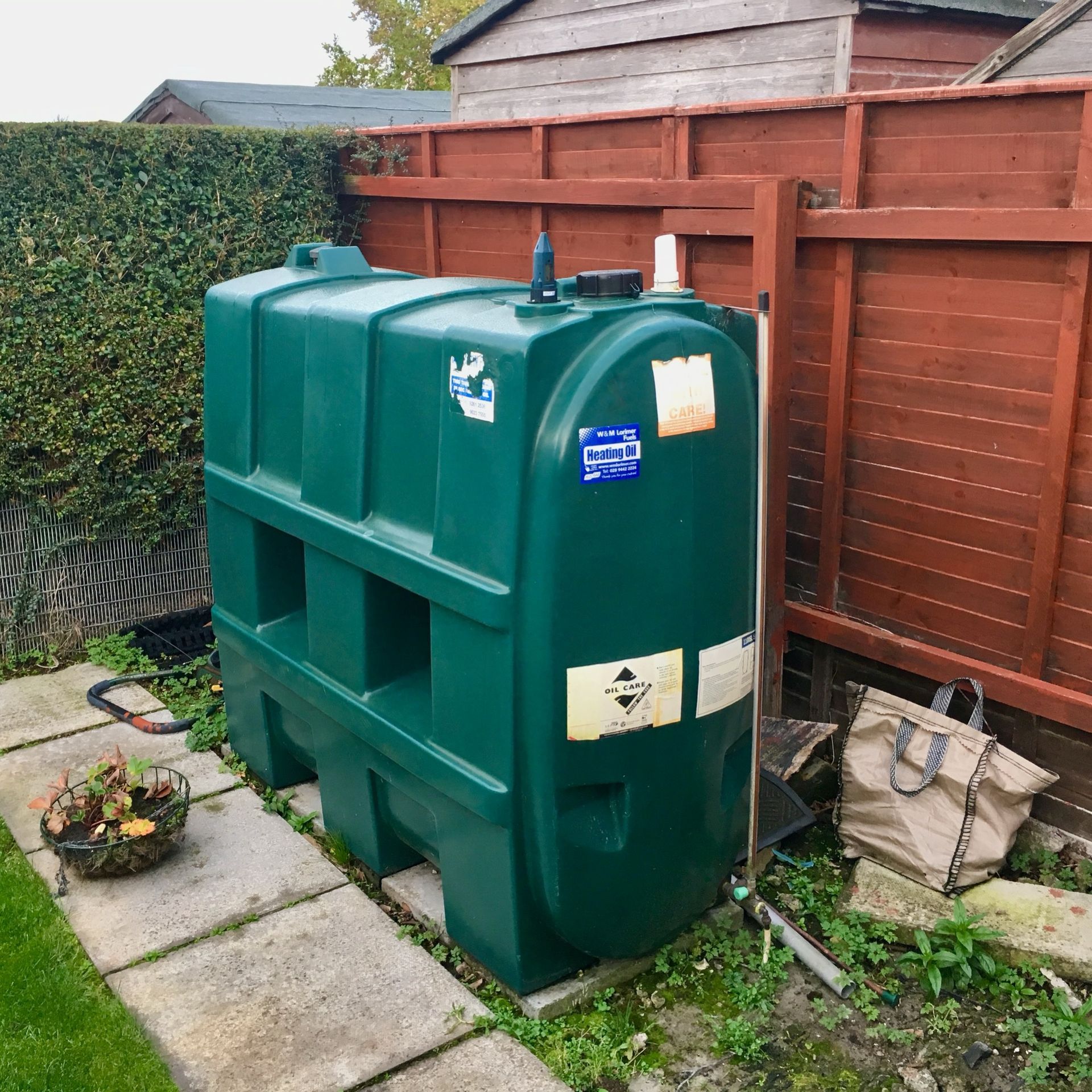
Sight gauges are suitable only for single skin heating oil tank installations and must be inspected at least annually. Photo Credit: Author
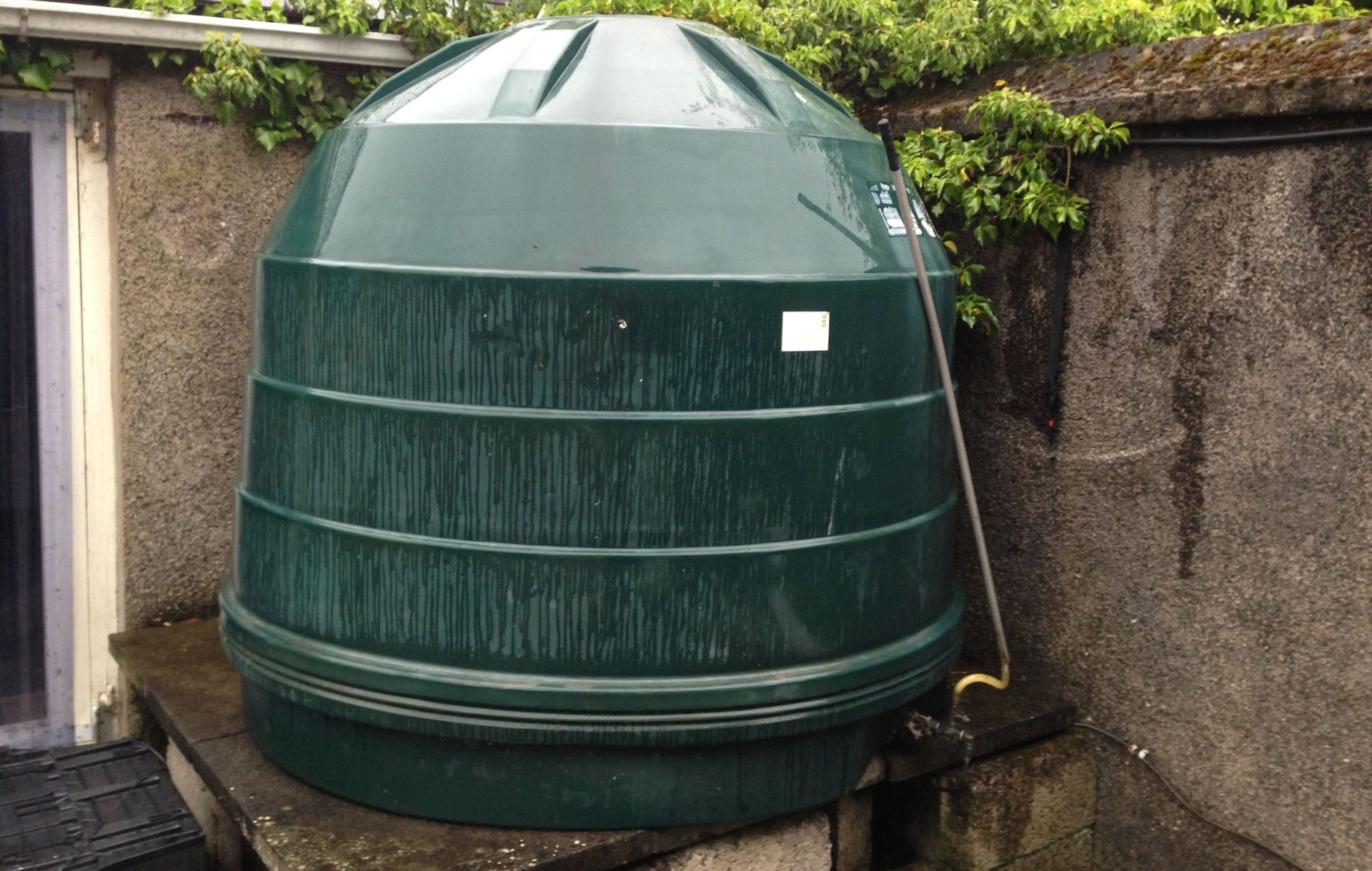
Damaged and defective sight gauges can be a significant pollution hazard and should be remedied without delay. Photo Credit: Author
Some manufacturers supply a gauge with their tank as standard, whilst others provide you with the freedom to choose your own.
So, what’s the best gauge to choose?
The simple answer is that there isn’t a single system or technology suitable for every installation. Yes, most homeowners and householders today fit a modern, wireless, oil level monitor. However, the ideal gauge will depend upon you, your lifestyle, your tank and its location. If you need guidance, why not consult your local tank installation technician or boiler service engineer?
Our Take...
For a standard domestic heating oil storage installation, we’d almost certainly choose either an Apollo Ultrasonic, or a Watchman Sonic Advanced oil tank level monitor. They’re simple and straightforward to fit, they’re easy to use, and they’re already the choice of hundreds of thousands of British and Irish heating oil users.
Whilst not strictly necessary, the Sensit USB option for the Watchman Sonic Advanced is also appealing… allowing you to monitor your tank, from almost anywhere in the world, using a smartphone.
Header Photo Credit: Dunraven Systems