SECURITY
Despite regular stories in the press about heating oil theft, it’s most unlikely you’ll ever become a victim. However, by taking a few sensible precautions, you can reduce the risk further still.
Heating oil is difficult to handle and difficult to sell on. And the market for suspiciously cheap heating oil from dubious sources is limited. For most criminals, there are easier ways to make money. But by considering the security of your tank from the outset, you can make the criminal’s life still harder.
Estimated Reading Time: 5 minutes
Location. Location. Location.
Where you position your oil tank matters for all sorts of reasons. It needs to be far enough away from buildings, boundaries and other structures to minimise fire risk, while remaining easily accessible for fuel deliveries, servicing and maintenance.
But accessible doesn’t have to mean highly visible. Where possible, choose a location that’s convenient to reach but discreetly positioned away from public roads, pavements and passing eyes. If complete concealment isn’t practical, carefully positioned fencing, trees or planting can help screen your tank and make it much less noticeable. Just remember that screening must never compromise safety. Avoid placing trellises, fencing or vegetation too close to the tank, and don't allow plants to grow into the required clearance area. Click here to confirm fire safety clearance distances.
A little thought at the planning stage can make a big difference – helping keep your oil tank safe, accessible and discreet.
Single Skin v Bunded Tanks
Choosing between a single-skin and a bunded tank can make a significant difference when it comes to security.
A single-skin tank can be fitted with locks and other security devices, but these are generally most effective at deterring only the most opportunist of thieves. Given enough time and determination, the tank itself may still be relatively easy to access. A bunded tank, by contrast, effectively places one tank inside another. As well as providing valuable environmental protection in the event of a spill, this additional layer of security makes stored fuel considerably more difficult to access.
At most domestic installations, positioning a tank underground or inside a suitable building will be neither necessary nor desirable, but they can provide an additional degree of protection against fuel theft.
Lighting and CCTV
While we're shedding some light on oil tank security, it can be a good idea to shed some light on the tank itself. Motion-activated security lighting is inexpensive, practical and relatively straightforward to install. Just be sure to position the light carefully and adjust the sensor so that it activates only when someone approaches the tank — not every time the neighbour's cat shakes its tail.
CCTV is another increasingly affordable option. Modern systems can provide high-quality recording, remote viewing and movement alerts, and can be particularly effective when combined with motion-activated lighting. The aim isn't to turn your garden into Fort Knox. Simply making the tank more visible — and making it obvious that anyone approaching it may be recorded — can provide a useful additional deterrent.
Outlet Position
No matter how well designed any tank is, so long as it features a bottom outlet, it will remain vulnerable to fuel theft. Simply disconnect the oil line and stored fuel will be discharged from the tank. By contrast, choose a bunded tank fitted with a top outlet system featuring an anti-siphon valve, and should the oil line become severed or disconnected, any stored fuel will remain safely and securely inside your tank.
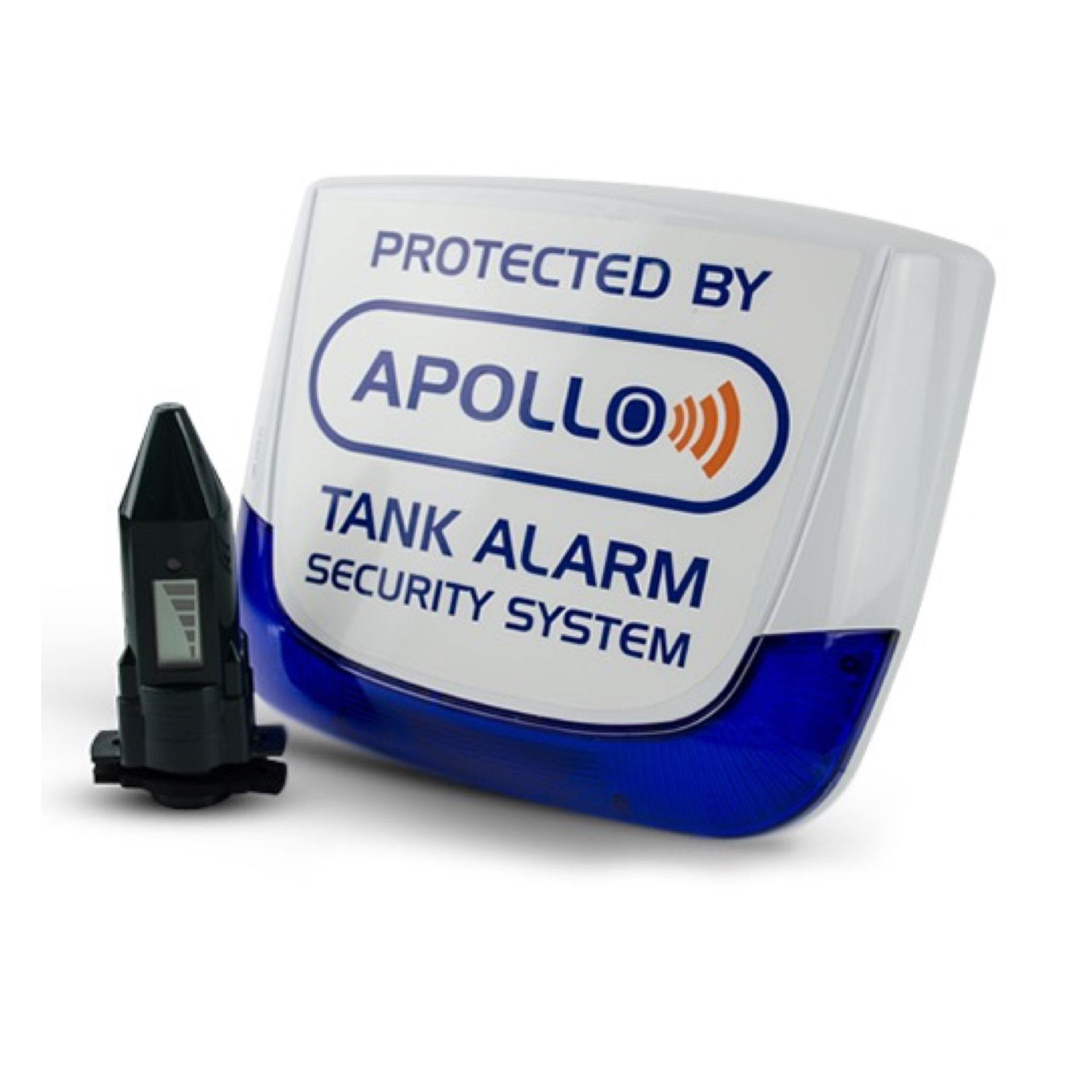
Dedicated Oil Tank Alarms are available, such as this Apollo Tank Alarm from Dunraven Systems. Photo Credit: Dunraven Systems Limited

Locking solutions are available to suit a wide range of tank lids, caps and access points. Photo Credit: Author
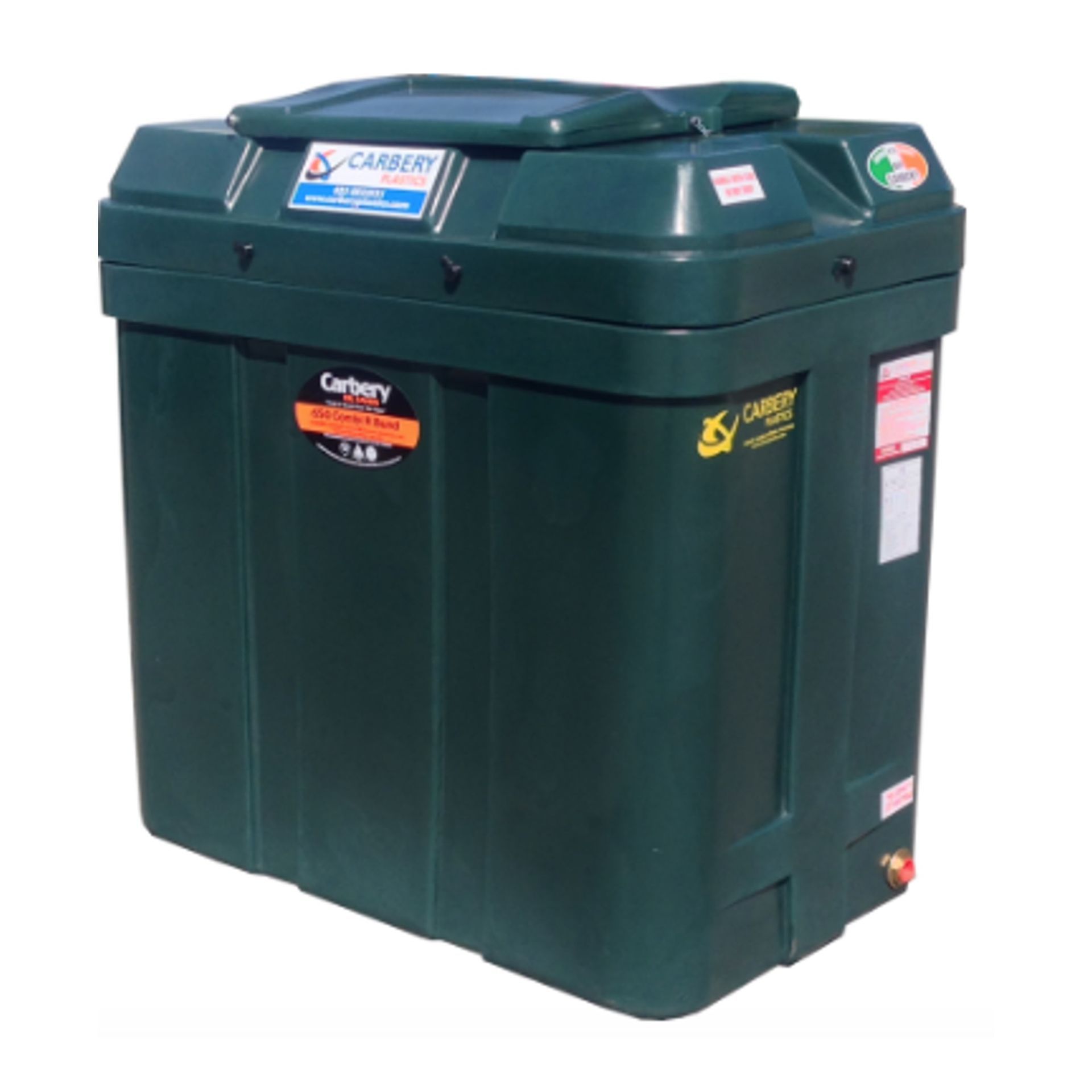
Bunded oil tanks such as this Carbery 650RB model, are more difficult to gain access to than single skin equivalents. Photo Credit: Carbery Plastics

Locks and Caps
Some heating oil tanks are now supplied with lockable caps and lids as standard, providing a simple but useful first line of defence against the opportunist thief. Of course, a lock only works when it's actually used, so make sure caps and lids are kept securely locked whenever the tank isn't being filled or serviced.
If your existing tank doesn't have a lockable lid or cap, don't worry. A variety of retrofit locking devices are available for both plastic and steel tanks.
But remember: locking the tank itself is only one part of the solution.
Try looking at your property through the eyes of a potential thief. How easy would it be to reach your oil tank without being seen or challenged? Could someone simply walk through an unlocked gate, drive up beside the tank, or gain access from an adjoining property? That's why securing access to the tank can be every bit as important as securing the tank itself. Keep gates closed and locked when they're not in use and consider whether fences, walls and other boundaries provide a meaningful deterrent. After all, if your property is easily accessible and not fully secured, it may be considerably more than just your heating oil that's at risk.
Alarms
If you're having a new heating oil tank installed — whether plastic or steel — there's a good chance it will be fitted with an electronic contents gauge. So why not consider going one step further and choose a model that either incorporates, or is compatible with an anti-theft alarm?
There are several different systems available. Some will sound an alert through the oil monitor's receiver unit inside your home. Others can trigger an external audible alarm, while more sophisticated systems can send an alert directly to your smartphone if they detect a sudden or unexpected fall in the level of oil inside the tank. Standalone alarm systems are available too, making it possible to add another layer of security to an existing installation.
There's no single system that's right for everyone. Consider the location of your tank, the level of security you require and how you'd prefer to receive an alert, then choose a solution that suits both your lifestyle and your budget.
Material of Construction
It's sometimes suggested that a steel tank is inherently more secure than a plastic tank when it comes to fuel theft. At first glance, that seems perfectly logical. Steel certainly looks more formidable.
In practice, however, the difference may be less significant than you might imagine. With powerful cordless tools now inexpensive, widely available and capable of cutting or drilling through a range of materials, a determined thief will be able to compromise either type of tank. So, rather than choosing between plastic and steel on security grounds alone, it's better to think about the security of the installation as a whole — the tank's location, accessibility, outlet arrangement, locks, lighting, alarms and other deterrents.
When it comes to protecting your heating oil, it's the combination of these measures that can make the biggest difference.
Our Take...
Whilst your lifetime risk of falling victim to heating oil theft is low, there's no doubt about it, heating oil theft can be financially and environmentally devastating. The good news however, is that whilst the risk can never be reduced to zero, by giving serious consideration to the security of your tank, you can reduce the risk of loss considerably.
The first step in understanding oil tank security, is of course, to recognise the value of fuel stored inside it, and then ask yourself the question 'Just how easy would it be to steal fuel from my tank?'.
Header Photo Credit: Pixabay.com