MAINTENANCE
Whilst modern heating oil tanks are engineered to be low maintenance products, they are not fit and forget products and are certainly not maintenance free.
Estimated Reading Time: 4 minutes
As you might expect, like every safety critical product, heating oil tanks must be installed, inspected and maintained by a suitably qualified person, such as an APHC or OFTEC Registered Technician. As a minimum, your tank must be serviced and inspected annually. Many boiler engineers are qualified to inspect and maintain your storage tank, so why not arrange to have your tank inspected and serviced at the same time as your boiler?
Failure to adhere to manufacturer’s service and maintenance schedules, will frequently void any warranty supplied with your tank.
Top Tips for Tip Top Tanks
As well as regular inspection and servicing, there are things you can do to help maintain your tank, and to get the most from your oil-fired heating system:
- Remove debris that may accumulate around the tank. As well as being unsightly, it’s a potential fire hazard. Decomposing garden waste can also corrode your oil supply line and tank fittings, which may result in an environmental pollution incident;
- Do not allow plants to grow any closer than 600mm (2’) from your tank. At all times, you should ensure there is sufficient space for someone to walk around your tank to inspect it;
- On a single skin tank, visually check the vent to ensure it is clear and free from obstruction;
- Check weekly for damage, corrosion, cracks, dark patches of soil, an unusual smell, or in damp weather, a rainbow sheen. Any of these factors may indicate a leak and should be reported to your local storage tank technician for evaluation without delay;
- Oil and water don’t mix… so periodically check that all lids, caps, vents and manholes are correctly affixed to the tank to reduce the risk of fuel contamination. If required, replacement caps and lids are affordable, readily available, and usually suitable for DIY installation;
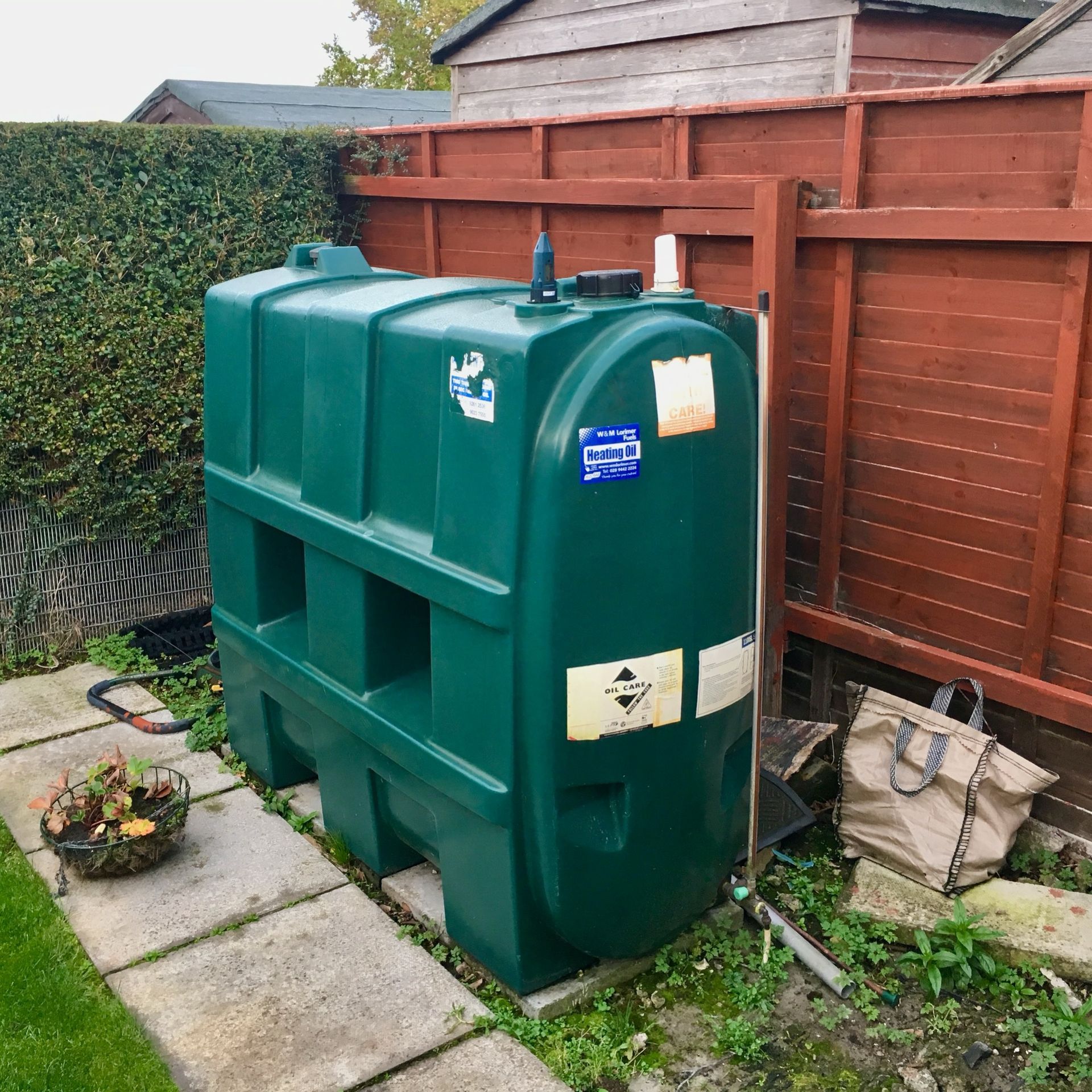
Surrounded by weeds, garden waste, and debris, this is an example of how not to maintain a tank. Photo Credit: Author
- Make sure the tank is fitted with an Oil Care label or similar guidance, detailing what to do in the event of a spill. Oil Care labels are supplied as standard with almost every new tank. In the UK replacement labels can be obtained from your local environmental authority. Many tanks supplied in the Republic of Ireland will also be fitted with an Oil Care label;
- Ensure a label is affixed to the tank describing the contents stored inside. This will often be affixed to the tank by your fuel distributor;
- As well as checking your tank regularly, be sure to check the oil supply line and components too, for any sign of damage or failure.
As modern oil tanks can provide many years of dependable service – it’s worth making the effort to show your tank some TLC.
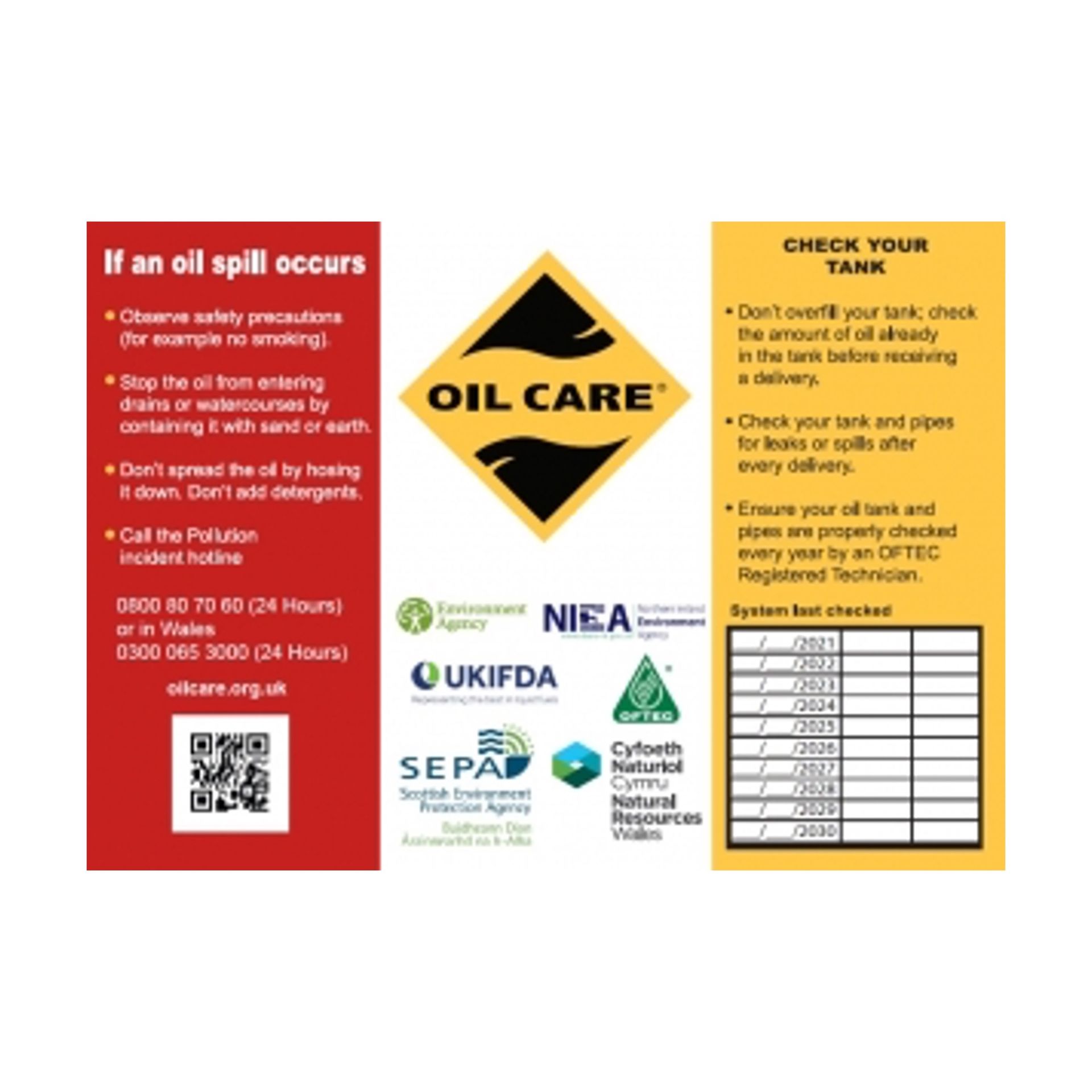
An Oil Care Label, issued by The Oil Care Campaign, should be fitted to all heating oil tanks installed in the UK. Photo Credit: Oil Care Campaign

Because water and oil don't mix, lids and caps should be kept closed, when not in use. Photo Credit: Author

To reduce the risk of mis-fuelling, a product identification label should be affixed to each tank. Photo Credit: Author


Home Insurance
If you install and maintain your tank correctly, it’s unlikely you’ll ever have to contend with a heating oil spill. However, it's worth checking out your home insurance policy, to make sure that it provides adequate cover in the event of a spill… just in case. Even a small spill can cost many thousands to clean up. And you may be forced to contend with legal expenses, a fine and a victim surcharge too.
Whilst some policies do include cover as standard, others are written around homes with mains heating i.e. mains gas and electric. If oil is not specifically included within the policy document, contact your insurance company or broker to ensure your home is adequately covered.
Life Expired Tanks
There is no universal agreement over when exactly a heating oil tank should be replaced. The operating lifespan of any tank will be dependent upon a number of installation and site-specific factors. However, as a rule we recommend giving serious consideration to replacing:
- Any single skin tank which is more than 10 years old;
- Any bunded or double skinned tank which is more than 20 years old;
- Any tank which displays signs of cracking, excessive corrosion, crazing, or any form of weakness.
If you’re unsure exactly how old your tank is (tip... it's almost certainly older than you think) most tanks incorporate a product reference code and/or date of manufacture close to the fill area. This typically consists of a long numeric or alpha-numeric sequence. Quote these details to the manufacturer and they should be able to tell you when your tank was manufactured.
Our Take...
Today’s tanks are designed and engineered to provide many years of dependable, reliable service. So, to help them along the way, it makes sense to show them a little love. An annual inspection and service by a suitably competent person is essential. It can help address issues before they become problems and failure to have a tank inspected and serviced, can void any warranty supplied with it. Similarly, a quick, weekly check and good housekeeping, can together go a long way in helping keep your tank in tip top condition for longer.
Header Photo Credit: Pixabay.com